The conflict involving Iran has effectively disrupted oil flows through the Strait of Hormuz. Shipments came to a halt this week. What does this mean for renewables? Is there a link at all?
In the last 24 hours, Brent crude oil prices have risen above $100 per barrel. This is among the fastest increases seen in six years. The last time prices rose so sharply was shortly after Russia’s invasion of Ukraine in 2022.
For crude oil, the percentage change has been 45.46% over the last 30 days. Though it peaked at just over $115, it has since dropped to $92.40. Gas prices have followed.
The good, the bad, and the maybe
This may be welcome news for oil company shareholders, but households face the prospect of higher costs to heat homes and fuel their cars. The Rural Services Network has warned that rural households will be hit hardest by the surge, as oil prices spike and wholesale prices become more volatile. Those who rely on heating oils, solid fuels or LPG — and are not connected to a mains gas network — could be the most exposed.
Could this drive more interest in renewables? The short answer – maybe.

The electrification and renewable link
There is a case that this instability in the oil and gas economy could, over time, drive greater interest in electrification over fossil fuels.
Electric vehicles (EVs) have had a slower start than early market expectations suggested. But significant economic disruptions have historically prompted shifts in consumer and policy behaviour — and a renewed focus on the risks of dependence on overseas oil and gas exports may be one such moment.
The situation along the Strait of Hormuz — where around 20% of the world’s oil supplies pass through — illustrates how quickly supplies can be destabilised by geopolitical uncertainty.
You may ask… Is there any established relationship between oil price shocks and the uptake of renewable technologies?
Esmaeili et al (2024) argued that oil price shocks are significant determinants of renewable energy trends, given that fluctuations in the oil market critically influence renewable energy expansion. But in which direction?
Their study, examining the impacts of oil supply, aggregate demand, and oil-specific demand shocks on renewable energy consumption from 1973 to 2021, found that such shocks initially reduced renewable energy attractiveness. One explanation is that economic disruption tightens household and government budgets, making upfront investment in renewable infrastructure, whether solar panels or EVs, harder to justify in the short term.
That, however, is not the complete picture. The same study found that sustained high oil prices ultimately led to increased renewable energy consumption, as the long-term cost advantage of renewables became harder to ignore for both consumers and policymakers.
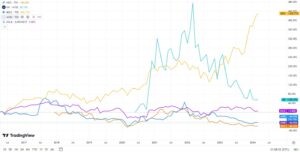
Oil price and renewables: The global picture this week
It is worth noting that the study focuses specifically on U.S. renewable energy consumption, rather than global or UK trends. The relationship may not translate directly to other markets with different policy environments, subsidy structures, and grid infrastructure.
The link to this week’s events is not straightforward. No direct line can be drawn between the current situation at the Strait of Hormuz and any near-term uptick in solar panel installations or EV purchases. The immediate economic impact is likely to be broader and more complex than that.
What the research does suggest is that historically, sustained oil price shocks have ultimately pushed energy systems toward greater renewable consumption — though not immediately. The initial disruption tends to work against it, as financial pressure makes large capital commitments harder for households already feeling the squeeze.
Another study conducted in China reinforces the link between higher oil prices and increased renewable consumption, conducted by Shahriyar Mukhtarov, who wrote “The positive effect of oil prices on renewable energy consumption can be seen as the cost advantage of renewable energy, which may grow with rising oil prices, leading to a rise in its adoption.”
Case examples of countries that invested in energy outside of oil
France is one example of a country with an electricity generation mix that expanded after the first oil shock. A decision was taken by the French government to expand the country’s nuclear power capacity (with Westinghouse technology). This decision came from France’s heavy engineering expertise. Nuclear energy made sense as part of a strategy to minimise imports and gain more energy security. Now, just over 50 years later, France has substantial energy independence, and low levels of carbon dioxide emissions per capita (over 80% of its electricity if from nuclear or hydro-electric power).
As a result of the 1974 decision, France now claims a substantial level of energy independence and an extremely low level of carbon dioxide emissions per capita from electricity generation, since over 80% of its electricity is from nuclear or hydro
Takeaway: Oil price instability may have some effect on renewables, if it remains
While both studies mentioned are not UK-specific, the broader structural signal, however, is harder to dismiss. The fragility exposed by the Strait of Hormuz — where a single chokepoint can send global prices sharply higher within days — reveals a risk argument that, over time, potentially shift both policy direction and investor appetite toward energy independence. Renewables offer a degree of that insulation. Fossil fuel supply chains, by their nature, do not.
The research suggests oil price instability may have some effect on renewable consumption — but only if prices remain elevated over time. Not a small blip along the way. Time will tell if this shock is here to stay for much longer.
Sources and references
IRGC says Iran in complete control of strait of hormuz amid Trump threats.
Crude Oil – Price – Chart – Historical Data – News
RSN Warns Rural Households Will Be Hit Hardest By Oil Price Surge – Rural Services Network
Renewable Energy Consumption – an overview | ScienceDirect Topics
Parisa Esmaeili, Meysam Rafei, Mahmoud Salari, Daniel Balsalobre-Lorente,
From oil surges to renewable shifts: Unveiling the dynamic impact of supply and demand shocks in global crude oil market on U.S. clean energy trends, Energy Policy, Volume 192, 2024, 114252, ISSN 0301-4215.
Shahriyar Mukhtarov, Oil prices and the renewable energy transition: Empirical evidence from China, Utilities Policy, Volume 91, 2024, 101840, ISSN 0957-1787.


Be First to Comment